Countless breweries in the United States have opened and disappeared since the early 19th century, but only one can claim the title of America’s oldest continuously operating brewery. D.G. Yuengling & Son opened in Pottsville, Pennsylvania, in 1829 and remains in the Yuengling family nearly two centuries later.
How Old Is the Oldest Brewery in America?
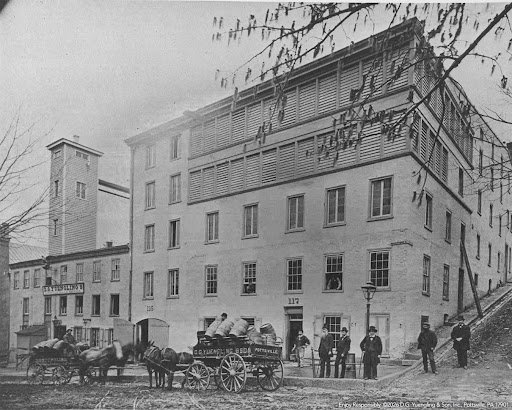
D.G. Yuengling & Son was founded in Pottsville, Pennsylvania in 1829, making it nearly 200 years old. Its claim as America’s oldest continuously operating brewery rests on the fact that the company remained in business through Prohibition, even when it could not legally sell alcoholic beer.
Yuengling is not the oldest brewery in North America. Molson traces its brewing history in Canada to 1786, more than four decades before Yuengling opened in Pottsville. Yuengling’s record therefore applies specifically to the United States rather than the continent as a whole.
Quick Facts
| Quick fact | Answer |
| Founded | 1829 |
| Founder | David G. Yuengling |
| Original name | Eagle Brewery |
| Home | Pottsville, Pennsylvania |
| Operating brewery locations | Three: two in the Pottsville area and one in Tampa |
| Family succession | Six generations |
| Flagship beer | Traditional Lager |
A Timeline of Yuengling’s History
- 1829: David G. Yuengling opens Eagle Brewery on Centre Street in Pottsville, Pennsylvania.
- 1831: A fire destroys the original brewery, prompting Yuengling to rebuild on Mahantongo Street, where the historic brewery remains today.
- 1873: Frederick Yuengling joins his father in the business, and Eagle Brewery becomes D.G. Yuengling & Son.
- 1920–1933: The company stays in business during Prohibition by producing near beer and operating a dairy.
- 1933: After Prohibition ends, Yuengling brews Winner Beer and sends a truckload to President Franklin D. Roosevelt.
- 1985: Richard L. “Dick” Yuengling Jr. purchases the brewery from his father and takes control of the family business.
- 1987: Traditional Lager returns to the lineup and eventually becomes Yuengling’s flagship beer.
- 1999–2001: Yuengling adds its Tampa brewery and completes the Mill Creek facility near Pottsville, substantially increasing production capacity.
- 2020: Yuengling forms a joint venture with Molson Coors to expand distribution beyond its traditional East Coast markets.
- 2021–present: The brewery continues expanding westward while D.G. Yuengling & Son remains independently family-owned.
How Yuengling Began in 1829
David G. Yuengling came to the United States from Württemberg, Germany, and settled in Pottsville. His family name was originally spelled Jüngling before it was anglicized to Yuengling.
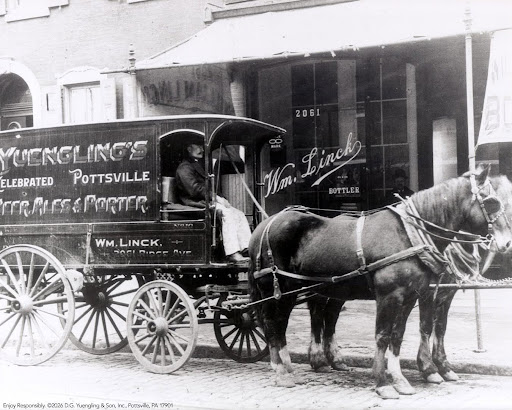
Pottsville was a sensible place to open a brewery. Pennsylvania’s booming coal industry was drawing miners and laborers to the area, along with taverns and other businesses. Beer had a ready-made market, while the brewery’s hand-dug underground caves provided the cool conditions needed for fermentation and storage before modern refrigeration.
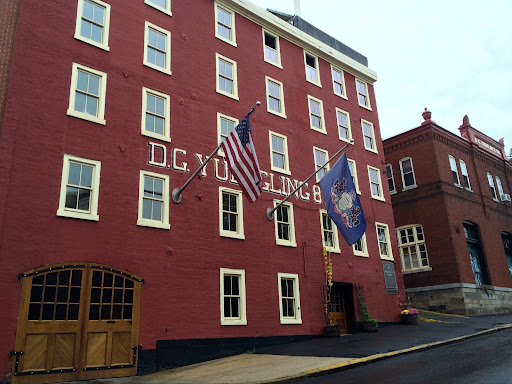
Yuengling opened Eagle Brewery on Centre Street in 1829. Just two years later, a fire destroyed the original building. Rather than abandon the business, he rebuilt on Mahantongo Street. That property remains the site of Yuengling’s historic Pottsville brewery.
In 1873, Frederick Yuengling joined his father as a partner, and Eagle Brewery was renamed D.G. Yuengling & Son. The new name established the brand identity the company still employs today.
How Yuengling Has Survived for Nearly 200 Years
Age alone doesn’t explain Yuengling’s survival. Plenty of breweries founded in the 1800s had loyal customers and recognizable names. Still, most of them closed, merged with competitors, or became brands under the umbrella of much larger corporations.
Yuengling endured because its owners were willing to change the business without discarding its identity. The brewery preserved old products and its Pottsville roots, but it also invested in production, adjusted its lineup, and entered new markets when opportunities arose.
Surviving Prohibition
With the passage of the 18th Amendment, National Prohibition took effect in 1920 and lasted until the 21st Amendment repealed it in 1933. The law blocked breweries from producing and selling alcoholic products, forcing hundreds of companies to close or find something else to make. The National Archives’ history of the Volstead Act explains the federal restrictions that reshaped the American alcohol business.
Yuengling switched to “near beer” containing no more than 0.5% alcohol. Its products included Yuengling Special, Juvo, and Por-Tor. The company also constructed a dairy across from the brewery in 1920 and sold milk and ice cream.
A brewery selling ice cream sounds like an odd detour, but it was a practical response to an existential problem. Yuengling already understood production, refrigeration, packaging, and distribution. The dairy gave the family another legal source of revenue while alcoholic beer production was prohibited.
When Prohibition ended on December 5, 1933, Yuengling celebrated by brewing Winner Beer and sending a truckload to President Franklin D. Roosevelt.
Remaining Family-Owned
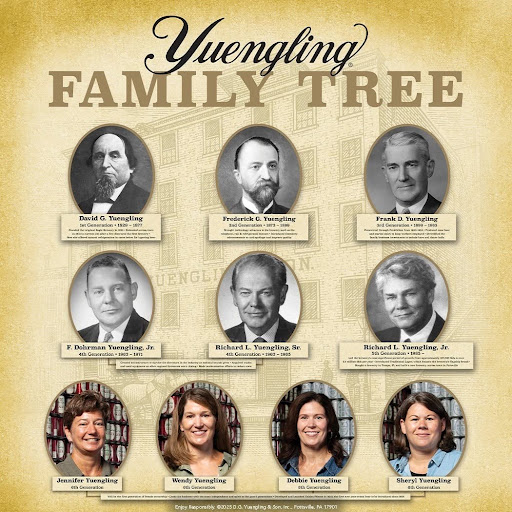
Yuengling has stayed under family ownership for six generations. Richard L. “Dick” Yuengling Jr. bought the company from his father in 1985 and remains its CEO and owner. His four daughters, Jennifer, Debbie, Wendy, and Sheryl, hold roles across operations, administration, employee engagement, and order services.
However, family ownership did not automatically guarantee success. By the 1980s, the brewery had history but needed stronger sales, more efficient production, and a clearer path for growth. Dick Yuengling modernized the operation, increased capacity, and pushed the brand into additional markets.
That continuity of ownership also kept the company tied to Pottsville. Many old beer names survive only as trademarks controlled by multinational beverage companies. Yuengling’s name, brewery, and ownership remain connected to the same family and Pennsylvania town almost two centuries later.
Balancing Tradition and Innovation
Two of Yuengling’s oldest names, Lord Chesterfield Ale and Dark Brewed Porter, remain in its lineup. Its most consequential modern success, however, also came from looking backward.
Yuengling revived its 19th-century amber lager recipe in 1987 as Traditional Lager. Brewed with Cascade and Cluster hops, it has a deep amber color, caramel malt character, and a lighter body than its appearance might suggest.
Traditional Lager offered more flavor than many mainstream pale lagers without being too heavy or unfamiliar for casual beer drinkers. That middle ground helped turn it into Yuengling’s flagship and transformed the company from a historic local brewery into a much larger regional name and, later, a national one.
What Makes Yuengling Different From Other Historic Breweries?
Yuengling was already decades old when many of the breweries that came to define American beer were established. The difference in founding dates is striking, but Yuengling’s historical significance extends beyond simply getting there first.
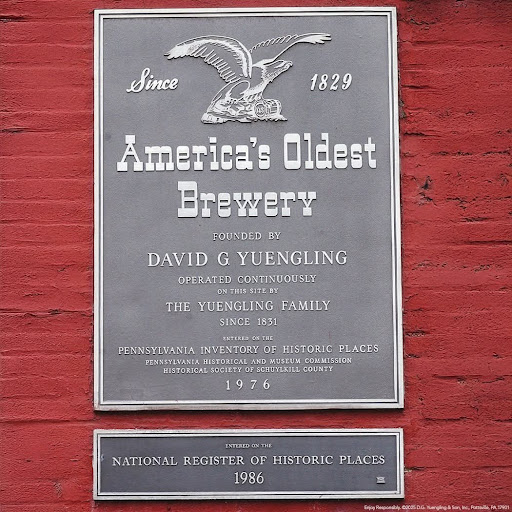
Some of that history also survives physically. The D.G. Yuengling & Son Brewing Complex was added to the National Register of Historic Places in 1985, recognizing the significance of the brewery and its surviving buildings.
Visitors are not touring a recreated historical attraction. The Mahantongo Street property remains part of a continuously operating beer company. Tours include the historic brewery, old equipment, and underground fermentation caves, allowing visitors to see how brewing changed as the business moved from the 19th century into modern production.
Yuengling vs. Other Historic American Breweries
New wpDataTable
| Brewery | Founded | Historic base | How it compares with Yuengling |
| D.G. Yuengling & Son | 1829 | Pottsville, Pennsylvania | Oldest continuously operating U.S. brewery; family-owned with its historic Pottsville brewery still in use |
| Anheuser-Busch | 1852 (as “Bavarian Brewery”) | St. Louis, Missouri | Founded 23 years after Yuengling, initially under the Bavarian Brewery name |
| Miller | 1855 | Milwaukee, Wisconsin | Founded 26 years after Yuengling |
| Leinenkugel | 1867 | Chippewa Falls, Wisconsin | Founded 38 years after Yuengling |
| Coors Brewing Co. | 1873 | Golden, Colorado | Founded 44 years after Yuengling |
The Role of Pennsylvania in American Brewing History
German immigrants brought brewing knowledge and helped make lager increasingly important in the United States during the 19th century. The Library of Congress guide to beer and brewing notes how German immigration changed American beer preferences and production.
Philadelphia developed into a major brewing center, but beer was not limited to the state’s largest cities. Breweries also served coal towns, farming communities, and industrial areas where local taverns were central gathering places.
How Does Yuengling Fit Into Pennsylvania Brewing History?
Yuengling’s story is one chapter in a much larger state brewing tradition. For the broader arc, from early brewing roots to the modern craft era, see this overview of Pennsylvania brewing history.
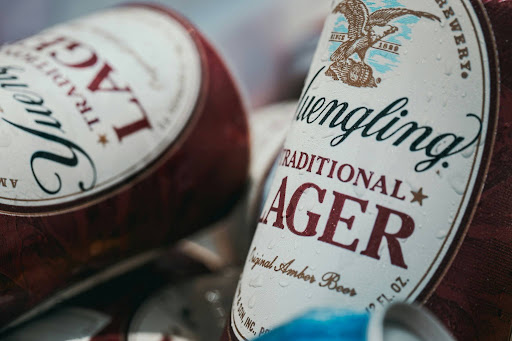
In many Pennsylvania bars, especially around Philadelphia, customers have long been able to simply order “a lager” and receive a Yuengling Traditional Lager. Few brands become so familiar that the beer style itself can serve as the order.
Yuengling Today: Nearly Two Centuries Later
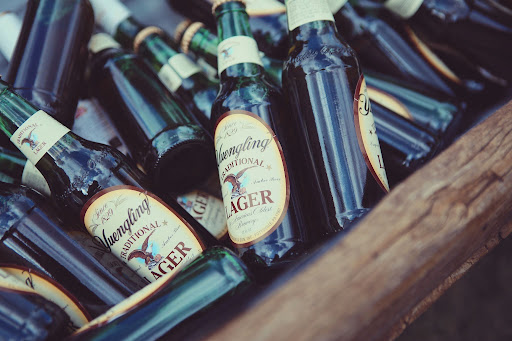
Yuengling now operates its historic brewery and Mill Creek facility in the Pottsville area, along with a brewery in Tampa, Florida. Traditional Lager remains the flagship, while the current lineup also includes Light Lager, FLIGHT, Black & Tan, Golden Pilsner, Lord Chesterfield Ale, Dark Brewed Porter, Premium, and Premium Light.
The company’s growth beyond the East Coast comes partly through The Yuengling Company, a joint venture formed with Molson Coors in 2020. The arrangement supports brewing and distribution in markets that Yuengling could not efficiently serve from Pennsylvania and Florida alone, but it did not transfer ownership of D.G. Yuengling & Son. The original company remains family-owned and operates separately from the joint venture.
The expansion continues carefully rather than all at once. Recent moves have included Yuengling’s expansion into Iowa and Wisconsin, bringing a beer once associated mainly with Pennsylvania and the East Coast into more of the Midwest.
Yuengling has also continued to lean on its history in more recent marketing. Its America’s 250th anniversary campaign tied the brewery’s own longevity to the national milestone through limited-edition Lager packaging.
Final Thoughts: The Legacy of America’s Oldest Brewery
Yuengling’s distinction is not simply that it opened in 1829. It remained a living brewery rather than becoming a dormant name revived by another company generations later. Nearly two centuries of adaptation have changed the business enormously, but D.G. Yuengling & Son remains connected to the family that started it and the Pennsylvania city where its story began.
Ultimately, no continuously operating U.S. brewery has a longer history than Yuengling.
Photos Courtesy of D.G. Yuengling & Son unless otherwise specified