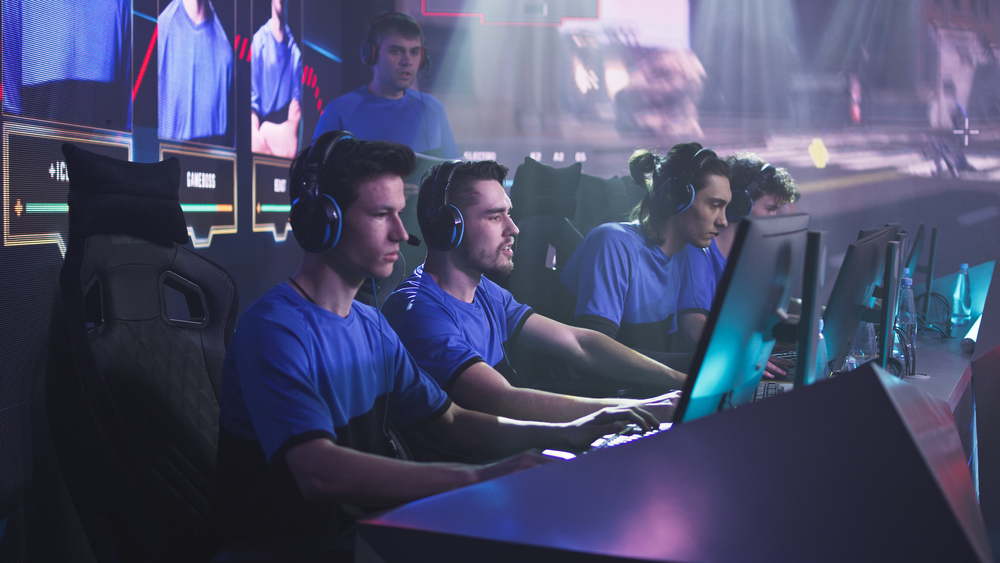
The Esports World Cup 2026 programme was a diverse mix of 24 competitive games and 25 tournaments, requiring careful coverage to ensure a successful event. This variety can also inspire breweries that are throwing esports viewing parties to design taproom events that cater to a variety of gaming audiences and make it a safe, comfortable place for fans to enjoy a pint while watching their favorite games.
The seven-week event was held in Paris, France, with over 200 clubs participating from over 2,000 players and a prize pool of $75 million. The fighting games, mobile, and other events were all part of the same championship brand, as were Counter-Strike 2, Dota 2, and League of Legends. For the players, this kind of event showed the significance of structuring markets based upon various rules, timetables, and statistical approaches. But simply having a title in the event did not guarantee that all bookmakers had odds on their games.
One Championship Connected 24 Different Games
In the 2026 edition of the Esports World Cup Foundation, teams and individual players from over 100 countries came together. It included popular video games like VALORANT, Counter-Strike 2, League of Legends, EA Sports FC 26, Tekken 8, chess, and Trackmania. Mobile esports was also present in plenty, with PUBG Mobile, Free Fire, Honor of Kings, and Mobile Legends: Bang Bang represented. The latter had two separate competitions (Mid Season Cup and Women’s International) for a total of 25 tournaments in 24 games. The championship didn’t focus on a single event; it was designed to be a series of events, with each of them featuring a different format of competition along with a beer party.
Such a programme can provide opportunities for digital sports platforms to showcase many sports events via a single navigation system. Visitors familiar with services such as fraga bet may expect sports-related information to be organised by discipline, tournament and scheduled start time. An esports event doesn’t mean that a sportsbook will accept bets on it, though. This coverage is subject to the bookmaker, the data provider(s), and the rules and regulations of the bookmaker’s service. The EWC format, however, proved to be illustrative of the importance of good navigation where tactical shooter, strategy, fighting, and racing games all occur within a single event and have very different rules.
Different Disciplines Require Different Betting Markets
This is what makes esports disciplines need different approaches to betting markets, as seen in the two aforementioned titles such as Counter-Strike 2 and Dota 2. In Counter-Strike games, you can bet on the winner, single maps, rounds, and specific player stats. Another competitive model can be found in Dota 2, where there are likely to be map results, eliminations, and in-game objectives that could result in a potential market. Both titles are also team-based, but the scoring system is very different, as are the rules for play. This makes it necessary for the operator to have suitable data feeds, statistical models, and settlement procedures for every game they support. Sometimes two tournaments can be found in the same section of a championship, and the markets offered are very similar, but often they’re more restricted to just match-winner markets.
Why one pricing model cannot fit every title
In fighting games, a different strategy is employed due to the individual games and relatively brief competitive bouts found in Tekken 8 and Street Fighter 6. These potential markets could include match winners, individual games, or the number of games played. Battle Royale games add more complexity, as many teams occupy the same lobby and the overall ranking will be based on position and elimination. There are no such statistical assumptions that can be made for PUBG Mobile compared to a 5-player tactical game. Other games, like racing games such as Trackmania, add a new form of gameplay, where Eldo points, ranking, and head-to-head results take precedence over game elimination and objectives. There is a need for a model appropriate to each discipline, depending on the nature of the competition rules and data available.
There was also a huge disparity in the monetary amounts of EWC 2026 games. Dota 2 and League of Legends had tournaments worth $ 2 million, while the Mobile Legends: Bang Bang Mid Season Cup had $3million. There was also a variance in the amount of money available for each game, with Teamfight Tactics having a prize pool of $500,000 while Trackmania had a prize pool of $500,000. These variations had an impact on the competitive level but were not necessarily more conducive to analysis for betting purposes in larger-sized events. Odds are based on a variety of factors, including past performance, team strength, team changes, and tournament organization. A popular game with a long history of use can be backed with a more in-depth analysis of the market than a less popular and established game that pays out the same amount of money.
Club Championship Connected Results Across Multiple Games
Esports World Cup 2026 also included a Club Championship, which awarded points to the organisations for their overall achievements in various disciplines. The results for the eligible clubs were awarded points based on their overall club ranking, and clubs with competitive teams in multiple titles were able to compete for an additional prize. The top organisations won a share of $30 million in the Club Championship, with $7 million going to the winner. AG. In addition to winning Tekken 8 and Trackmania, AL earned 5,300 points in other games and came out on top. This was designed to encourage players to follow organisations around a number of games, but Club Championship tables were not linked into the various games’ match rules and results.
Five Factors Shaping Esports Betting Coverage
Having many disciplines in one championship doesn’t take the edge off differences in betting markets. Accurate schedules, reliable statistics and settlement procedures, which are tailored to the rules of each competition, are required by operators. The market may not be a good fit for a battle royale game or a racing game. The technical requirements get more complex if multiple tournaments happen concurrently, or if delays, substitutions, and administrative decisions are involved to influence the games. Smooth operations are essential in keeping the esports viewing experience enjoyable for breweries and taprooms with a busy event. When planning beer service, coordinating event activities, and accommodating fans during a major esports tournament, there are five unique practical considerations to be taken into account:
Create distinct betting market conditions, based on the competitive rules of each game.
- Accurate timetables and up-to-date information when matches are delayed and/or rescheduled.
- Accurate statistics of maps, rounds, standings and individual exercises.
- Clear rules and regulations for overtime, forfeits and interrupted games.
- Availability of the market according to the local regulations and reliability of signal coverage.
- Live Data was a major necessity all along the Championship.
It was a 7-week schedule with lots of pressure on the platforms publishing esports results, statistics, and live odds. One tournament might include a best-of-3 Counter-Strike match, and another might have a lobby for a Battle Royale tournament with several dozen people. Preliminary standings should be clearly differentiated from final results, and it should be clearly marked whether a match has been “paused”, “delayed,” or “completed”. Slow Data Feed can cause information to lag behind the action, especially in the case of short hands or quick eliminations. The quality of the accurate timestamps and market suspension procedures, coupled with the reliability of the event feeds, are therefore critical. Coverage is not necessarily higher when more betting options are available, if the information upon which the options are based can’t be updated in a consistent fashion.
Some audience numbers are given to give a sense of the interest in the event. The organisers estimate that Esports World Cup 2026 saw 850 million viewers, and 440 million hours of viewing time for its broadcasts. The numbers do not necessarily indicate the number of distinct people gambling, but are reported by the organisers. They do show good participation in competitive games in various sports, however. For betting sites and sports data providers, it’s a matter of making something as complicated as a schedule comprehensible without suggesting that all of their sports titles have the same level of markets, or that past events would predict future results.
What the 2026 Event Revealed about Esports Betting
Esports World Cup 2026 proved that a single tournament can bring together 24 games while maintaining the distinct nature of each of their formats. It offered the summer of professional esports a wide range of events with a $75 million prize pool and a cross-game Club Championship. In the eyes of the betting industry, the primary lesson is not that a new title must be added to a catalogue, but rather that the level of market organisation is important.
There are different statistics, scheduling data, and settlement rules that are required for each game type, such as Counter-Strike 2, Dota 2, mobile battle royales, and fighting games. For future esports events to flourish, they must have the ability to deal with interdisciplinary differences while sticking to reliable data and effective communication. By carefully planning their brew schedules, communicating with their customers, and providing an event that allows fans to come back for the next tournament, breweries hosting esports watch parties can apply the same attention to their own events.