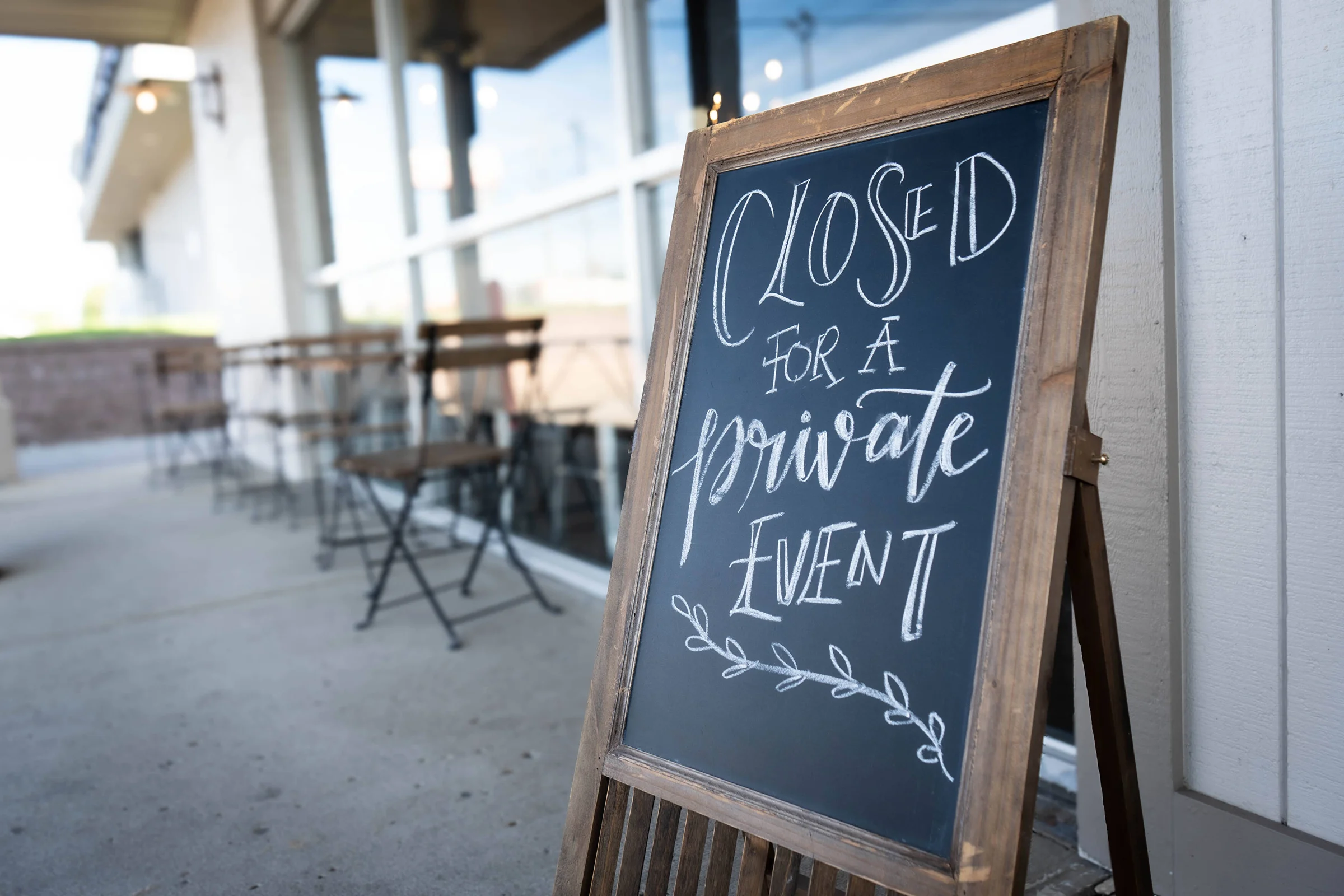
If you follow local craft breweries on social media, you’ve almost certainly seen the post before: “Hey everyone, just a quick heads up, our taproom will be closed to the public this Saturday for a private event.” And in 2026 it seems to be even more frequent (we think there is a reason for that).
If you’ve spent any time reading the comment section on a post like that, you know what usually follows. A handful of regulars grumble about their weekend plans getting derailed, while a few armchair quarterbacks chime in to declare that closing the doors to paying customers is “bad business.”
It’s easy to see where that reaction comes from. To a customer looking in from the outside, turning away foot traffic seems completely counterintuitive. But from an operational and financial standpoint? Closing for a private party or corporate gathering is often one of the highest-margin, lowest-risk decisions a brewery taproom can make.
It is no secret that craft beer consumption is on the decline. Between shifting consumer habits, tighter household budgets, and rising production costs, brewery owners are facing an increasingly tough landscape. In an era where draft sales are down across the board, private events offer a critical financial lifeline, bringing in guaranteed, predictable revenue to help offset those industry-wide drops in taproom volume.
Running a taproom on a regular Saturday comes with a mountain of variables that are completely out of a brewery’s control. A sudden thunderstorm or a brutal cold snap can wipe out lucrative patio traffic in minutes, while nearby festivals, major sports games, or holiday weekends can easily draw crowds away from the neighborhood. To top it off, customer spend is entirely unpredictable, some Saturdays bring wall-to-wall crowds spending heavily, while others turn into a slow crawl of folks nursing a single pint over two hours.
When a brewery books a private event, all that uncertainty disappears. Private bookings typically require an upfront facility fee, a guaranteed food and beverage minimum, and a deposit locked in weeks or months in advance. Whether 20 people show up or 100, the brewery knows exactly how much revenue is coming through the door before they even flip the sign to “Closed.”
Beyond revenue predictability, private events allow brewery owners to streamline their overhead in ways that a standard open-to-the-public shift simply doesn’t allow.
Instead of overstaffing “just in case” a crowd hits, or getting slammed while understaffed, managers know the exact guest count ahead of time. They can schedule the precise number of bartenders, barbacks, and floor staff needed.
In addition, most private contracts automatically include an 18% to 20% auto-gratuity. That ensures taproom staff walk away with solid, reliable pay for the shift, boosting morale and reducing turnover.
Private events package high-volume consumption into a tight 3-to-4-hour block. By compressing those sales into a shorter timeframe, the brewery maximizes revenue per operating hour. Once the party wraps up, many breweries reopen to the public for the remainder of the evening, effectively doubling up on revenue for the day.
There’s also a massive long-term marketing benefit that often gets overlooked.
When a company books a holiday party or a couple hosts a rehearsal dinner at a brewery, a significant portion of the guests may have never set foot in that taproom before. Private events act as an organic marketing tool, bringing in dozens of potential new regulars who get to experience the beer, staff, and atmosphere firsthand.
Nobody likes showing up to their favorite watering hole only to find a sign on the door saying “Closed for Private Event.” It’s a temporary inconvenience for regulars, and smart breweries do their best to communicate these schedule changes well in advance across social media and email lists.
But in an industry fighting declining overall volume and razor-thin margins, private bookings provide crucial financial stability that keeps the lights on. So, the next time you see your local spot closed for a private party, don’t sweat it, just celebrate the fact that a small business in your community is making a smart move to stay profitable.