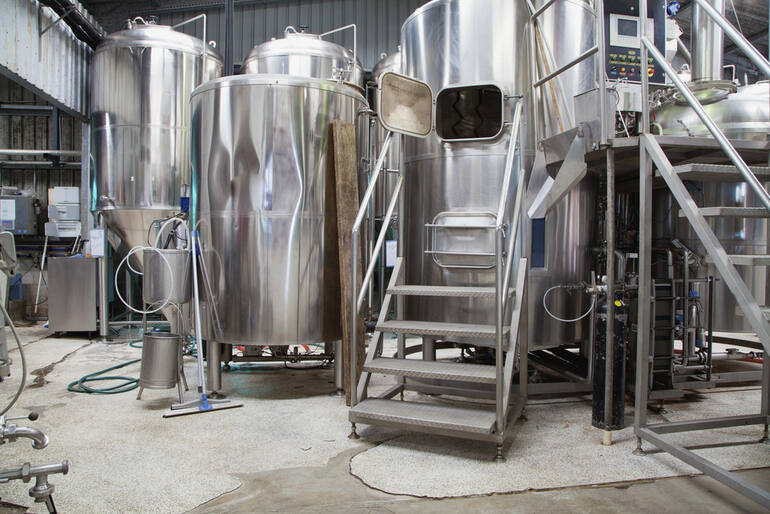
Zero on the auction clock. That stainless tank on your screen is yours now. For a minute, the price still feels like the clever part of the deal. Then the practical questions begin: capacity, installation, maintenance, energy use, and how well the equipment actually fits your brewing operation. A bargain only stays a bargain when the tank delivers value beyond its initial price. Great. You bought it. Now picture the seller’s loading door, your own brewhouse entrance, and several hundred pounds of stainless steel in between.
That question isn’t theoretical in Pennsylvania. The owner of Dublin Brewing Company in Downingtown told us he bought most of his equipment through auctions, eBay, and similar sources, even making a weekend run to Virginia for four large tanks. More recently, the Lost Planet Brewing bankruptcy auction put an entire brewery’s infrastructure on the market. Used equipment can stretch a startup or expansion budget a long way. The winning bid, though, is only the first number to worry about.
Winning The Bid Is The Easy Part
A photo of a bright fermenter doesn’t tell you even if it will clear the seller’s doorway, fit on the trailer you lined up, or arrive with the fittings and controls you thought were included. Before you place the bid, picture the pickup day. Do you know the dimensions and weight? Is there a hard removal deadline? Maybe the auction photos never showed the loading door. Maybe there’s no forklift waiting when you arrive.
Pulling a machine out of a working brewhouse can turn a cheap win into a Saturday spent hunting down a rigger. Distance matters, too. A tank bought cheaply several states away still has to cross every mile between the auction floor and your production space. Dublin Brewing’s experience is a good reminder: sometimes buying brewery equipment at auction means being willing to get it.
Make Sure It Fits More Than The Floor
A rectangle of tape on the concrete can make everything look settled. The real test starts when the machine meets the room. Picture a filler rolling through the door. The electrician reads the plate and finds it requires power that the building doesn’t have. The drain is nowhere near where you’d hoped, a hose fitting is the wrong size, and the spot that looked roomy on paper suddenly leaves no space to open a panel.
That’s the sort of mismatch covered in the Brewers Association’s seminar on used and new brewery equipment. The auction photos may show clean stainless steel. They don’t show the little arguments an old machine can have with a new home. One tight doorway can wreck an otherwise perfect floor plan. A tank may have plenty of room once it is inside, yet still catch on the turn before it ever gets there.
When A Pallet Is Easier Than A Tank
Not every auction purchase is a towering fermenter. Pumps, controls, small keg washers, parts, and pieces of packaging equipment may be practical to secure to a pallet and send by less-than-truckload freight. A pump strapped to a pallet creates a different shipping problem from a tank that needs a rigger. After the smaller item is packed, the outside dimensions and total pallet weight can be used to estimate its density-based freight class. Measure the shipment as it will actually travel, not the bare machine sitting on the floor. Density doesn’t get the last word.
The National Motor Freight Traffic Association lists handling, stowability, and liability alongside it as classification factors. A carrier or freight pro can then pin down the right NMFC item and class for the shipment. And if what you bought needs specialized rigging or an awkward trip through a loading door, you’re out of pallet territory. Plan the move around the machine itself rather than trying to squeeze it into an LTL shortcut. For brewery equipment, that means accounting for access, lifting requirements, dimensions, and site conditions before the shipment leaves the seller. A little planning can prevent costly delays when the equipment reaches the brewery.
Leave Room For The First Bad Surprise
The used machine is finally in the building. Resist the urge to schedule a full production day around it immediately. Inspect what arrived against the sale description, clean it as appropriate, and address any worn seals, missing fittings, damaged cables, or controls that need attention before tying it into production. Used equipment has a history, and some of that history only becomes obvious when you’re standing beside it with a wrench. The hammer price is only one bill.
There may still be a rigger at the old site, a truck on the highway, an electrician at yours, and one stubborn fitting nobody noticed in the auction photos. By then, the auction price is old news. On the first brew day, boring is a compliment. No one is digging through the parts bin, no half-filled tank is waiting on a forgotten fitting, and the old machine is humming along with the rest of the room. A well-planned setup keeps equipment, ingredients, and production schedules working together, helping brew days run smoothly without unnecessary delays.