The economic storm hitting the craft brewing industry has claimed another local favorite. Lost Planet Brewing Company, a fixture in the Montgomery County beer scene, is officially heading to the auction block following a Chapter 11 bankruptcy filing. The filing, which falls under the breweries LLC name of “Spring Mountain Brewing” was filed May 17th of this year. For residents of Royersford, Pennsylvania, the news marks a sobering turn of events for a business that set out to revitalize one of the borough’s most cherished historic structures.
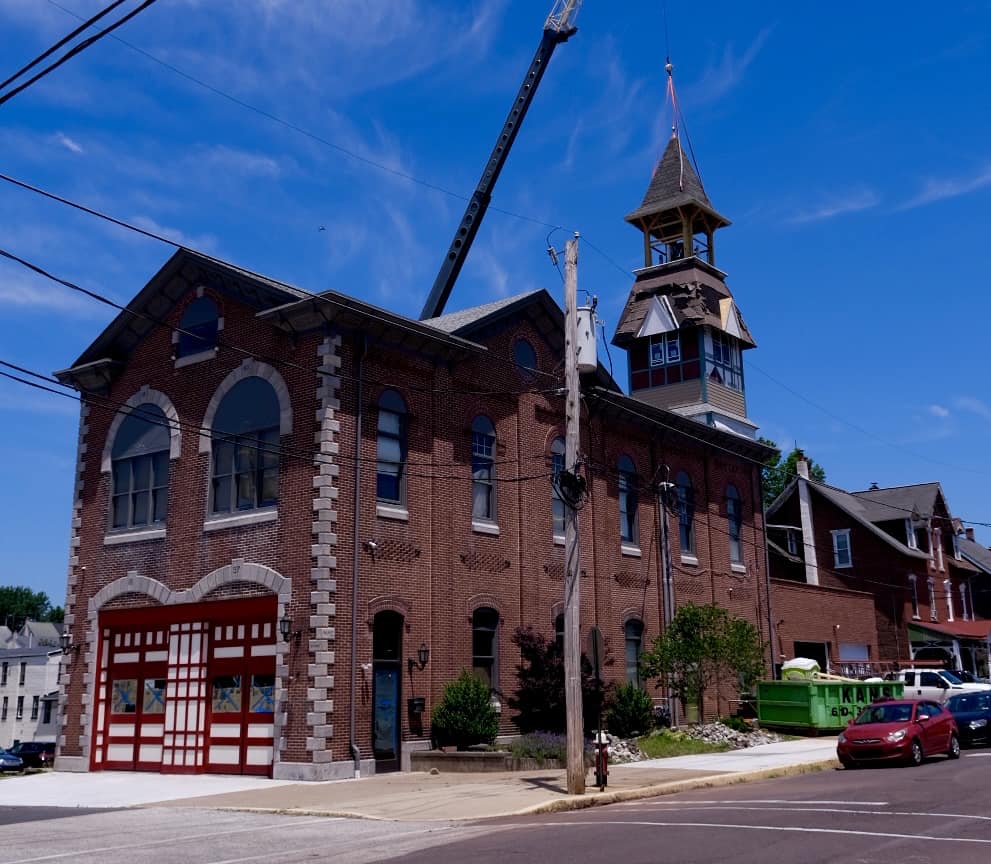
Located inside the beautifully restored Humane Steam Fire Engine Co. No. 1 building at 301 Walnut Street, Lost Planet Brewing opened its doors in late September 2022. The 6,500-square-foot space seamlessly blended the building’s rich history as Royersford’s very first firehouse with a sleek, space-themed aesthetic. It featured an antique Gamewell fire alarm system and a restored piano alongside a massive 10-barrel brewhouse, a bustling taproom, and a seasonal outdoor beer garden.
The Chapter 11 filing transitions the business into an asset sale, putting the entire turnkey brewery up for grabs to the highest bidder. Because it is a bankruptcy auction, the sale includes the extensive brewing infrastructure, the fully equipped gastropub kitchen, the real estate of the historic firehouse, and potentially the intellectual property—including the brewery’s branding and popular beer recipes.
For a prospective buyer, the offering represents a rare opportunity to acquire a fully built-out, operational craft brewery without the multi-year headache of zoning, permitting, and construction. However, for the Royersford community, the sale introduces a wave of uncertainty. A new owner could choose to keep the Lost Planet brand alive, or they could completely rebrand the historic location into an entirely new concept.
The downfall of Lost Planet Brewing is far from an isolated incident. Across Pennsylvania and the United States, the craft beer industry is undergoing a massive post-pandemic correction.
Between 2010 and 2020, craft beer experienced an unprecedented gold rush. Microbreweries popped up in nearly every suburban downtown, relying on heavy foot traffic and premium price points. But the macroeconomic landscape of 2026 looks vastly different than it did a few years ago. Brewers are currently battling a compounding series of financial hurdles:
-
Skyrocketing Input Costs: The price of raw ingredients like grain, specialty hops, and carbon dioxide has surged, alongside the cost of aluminum cans and glass bottles.
-
Shifting Consumer Habits: Younger demographics are increasingly migrating away from traditional beer, opting instead for ready-to-drink (RTD) canned cocktails, hard seltzers, and non-alcoholic alternatives.
-
Saturated Markets: With thousands of breweries operating nationwide, securing shelf space at local distributors or drawing consistent crowds to a brick-and-mortar taproom has become fiercely competitive.
When a brewery pours significant capital into restoring a massive historic landmark, such as a 19th-century firehouse, the margin for error shrinks drastically. High fixed real estate costs require a constant, high volume of sales to stay in the black. When foot traffic slows or discretionary spending dips, those massive overhead costs become unsustainable.
As the bankruptcy court processes move forward, the local craft beer community will be watching closely to see who steps up to buy the historic property. As of this writing the brewery continues to operate under modified/ limited hours. Whether the new owners continue operating a brewery or transforms into something else entirely, Lost Planet’s abrupt departure serves as a stark reminder of the fragile tightrope local small businesses are walking.